

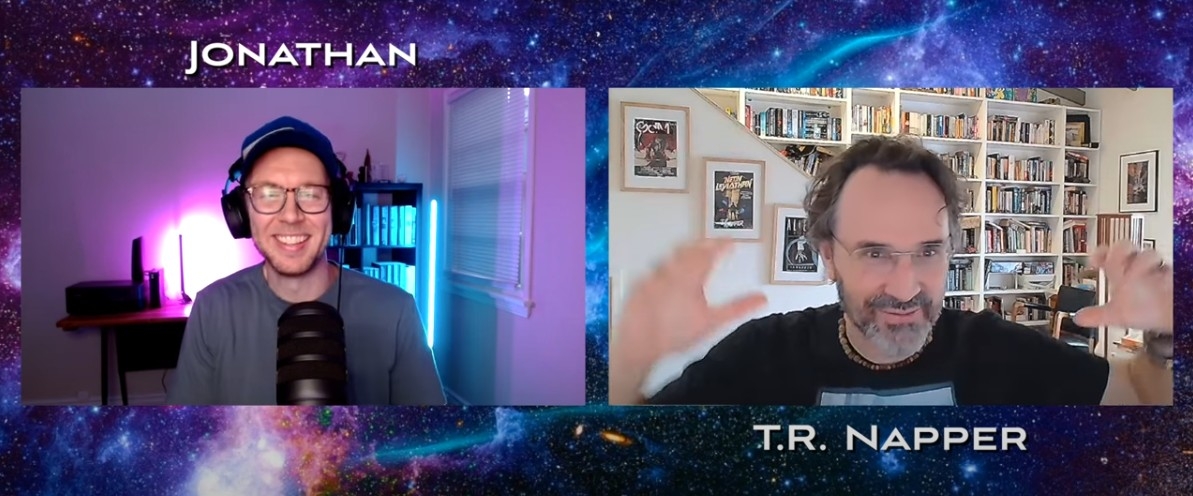
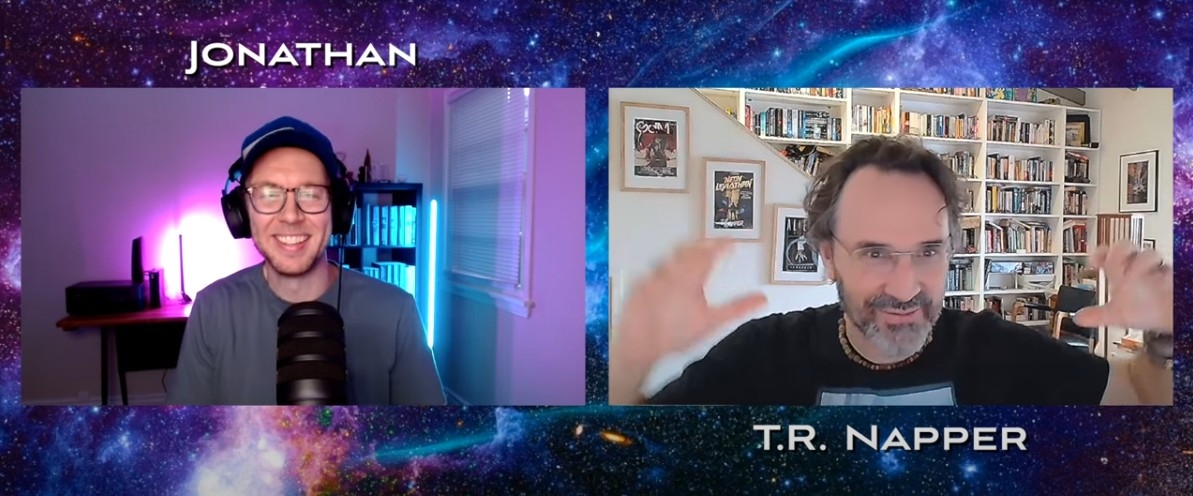
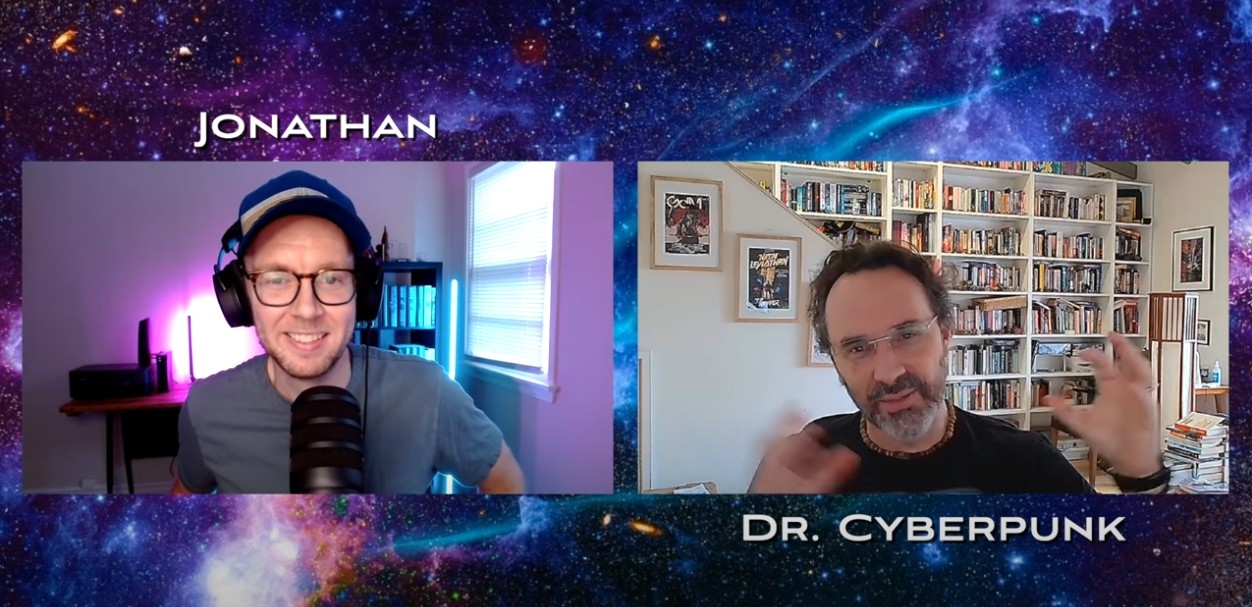
I recently did an interview with Jonathan, an Australian BookTuber who runs a channel called Words in Time. He’s got some great content, so I recommend you go and check it out. I’ve embedded the interview in this article, and below it have added the notes I made before we talked (re-written into article form). The notes expand somewhat on the discussion in some cases, and in others make observations we didn’t have time for. Though they obviously don’t capture the back-and-forth and digressions (of which there were many), of the interview itself. Enjoy:
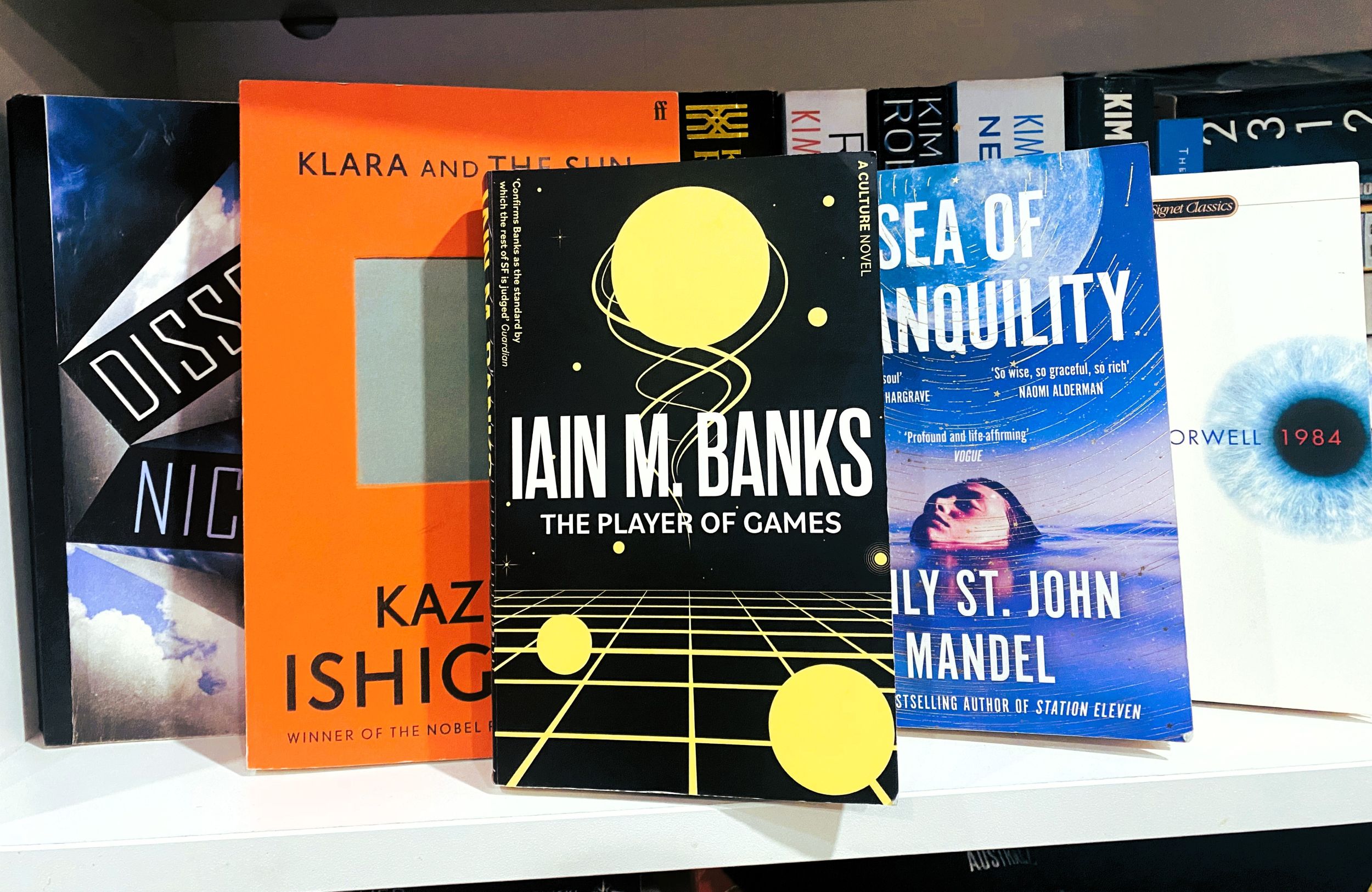
- Nineteen Eighty-Four (British) (1949)
I reread this recently, as I was teaching a class on the novel and this was one of the assigned texts. It’d been close to twenty years since the last time, so my specific memories of the reading experience had faded, to say the least. Ian McEwen – an author who gives great interviews about the craft and art of being a writer, which I recommend you seek out if that is your thing – says that if it’s been long time since we’ve read a book, we tend not to remember the book anymore, but just our opinion of the book.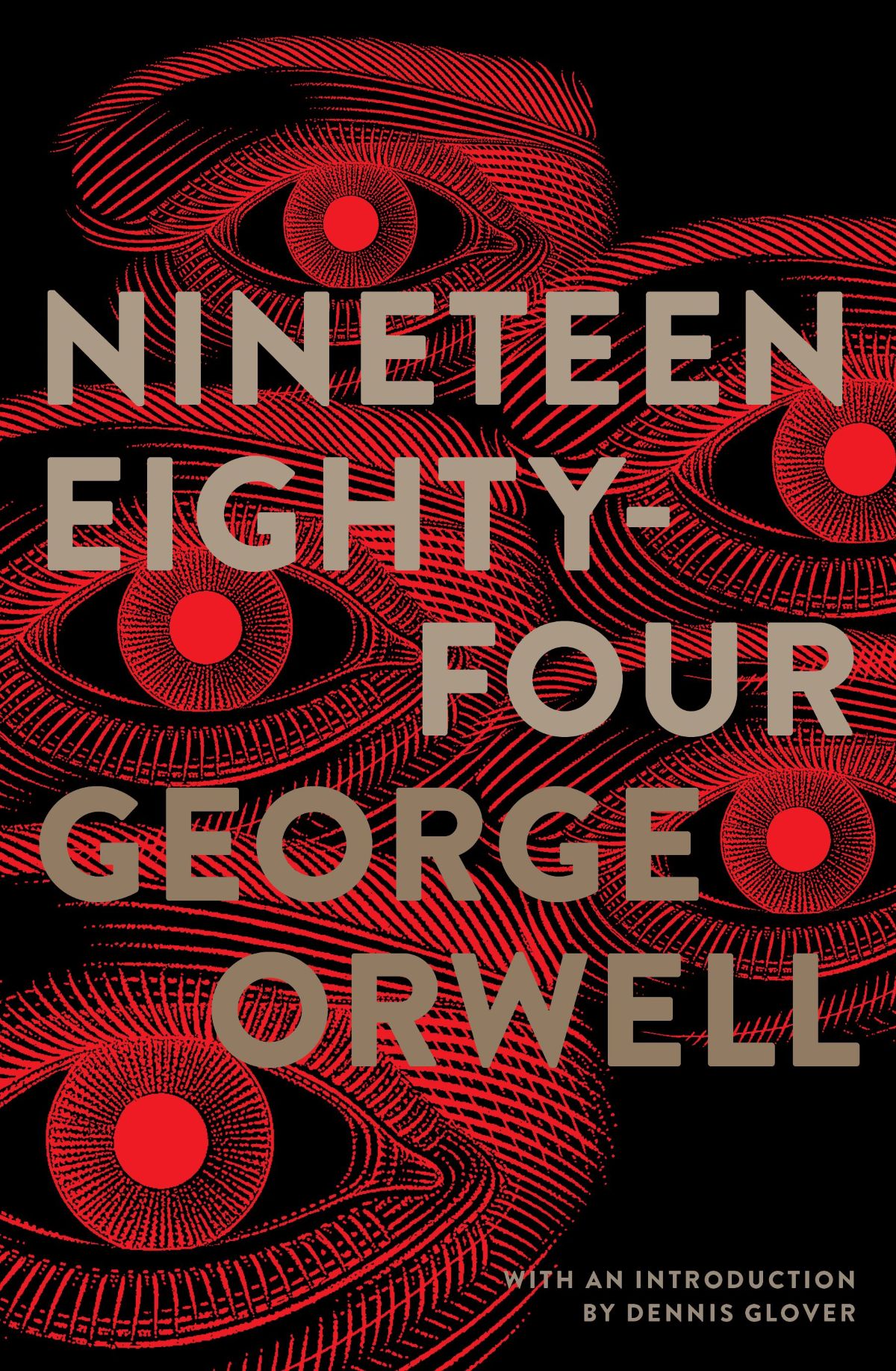
That was certainly true of my recollections of Nineteen Eighty-Four.
The first thing that struck me during the re-read was how sophisticated the world building. Now, I’m a world building fundamentalist. If it’s not done with sophistication, and internal consistency, I tend to be very unforgiving. So, for someone who hadn’t written science fiction before, Orwell does a masterful job introducing his world (which for him was four decades into the future) and making it feel believable and lived in. Very lived in. A worn down and bleak future, immersive from the very first page.
As most of you will know, the novel introduced powerful ideas into the common vernacular. ‘Thought police’ is one (more relevant than ever). ‘Double think’ is another: the idea that the indoctrinated can hold two contradictory thoughts simultaneously in the mind, and yet not have those contradictions alter their beliefs.
Perhaps one of the most relevant aspects of the novel is the loss of privacy. In Nineteen Eighty-Four there are no private spaces, a requirement enforced by the state.
 Here, in our reality, some don’t want a private space. Some yearn for every dimension of their lives to be online, to be studied and lauded and discussed. They seem fervently to believe they are a celebrity or influencer (some of them may well be, and how pathetic, then, the dreams cultivated by the modern world).
But for those of us who do want privacy, can’t have it. We are constantly surveilled, by these stalking devices all of us carry called smart phones. The corporations (and some governments) know where we are, who we are, our fears and phobias our love and hates, and how to endlessly manipulate and distract us.
- Sea of Tranquillity (Canadian) (2022)
Mandel tells beautiful stories. I read this in two sittings, which is unusual for me and a testament to how compelling I found the novel. Faultless prose, quality characterisation, good dialogue, excellent plotting, exquisite (literary) craftmanship.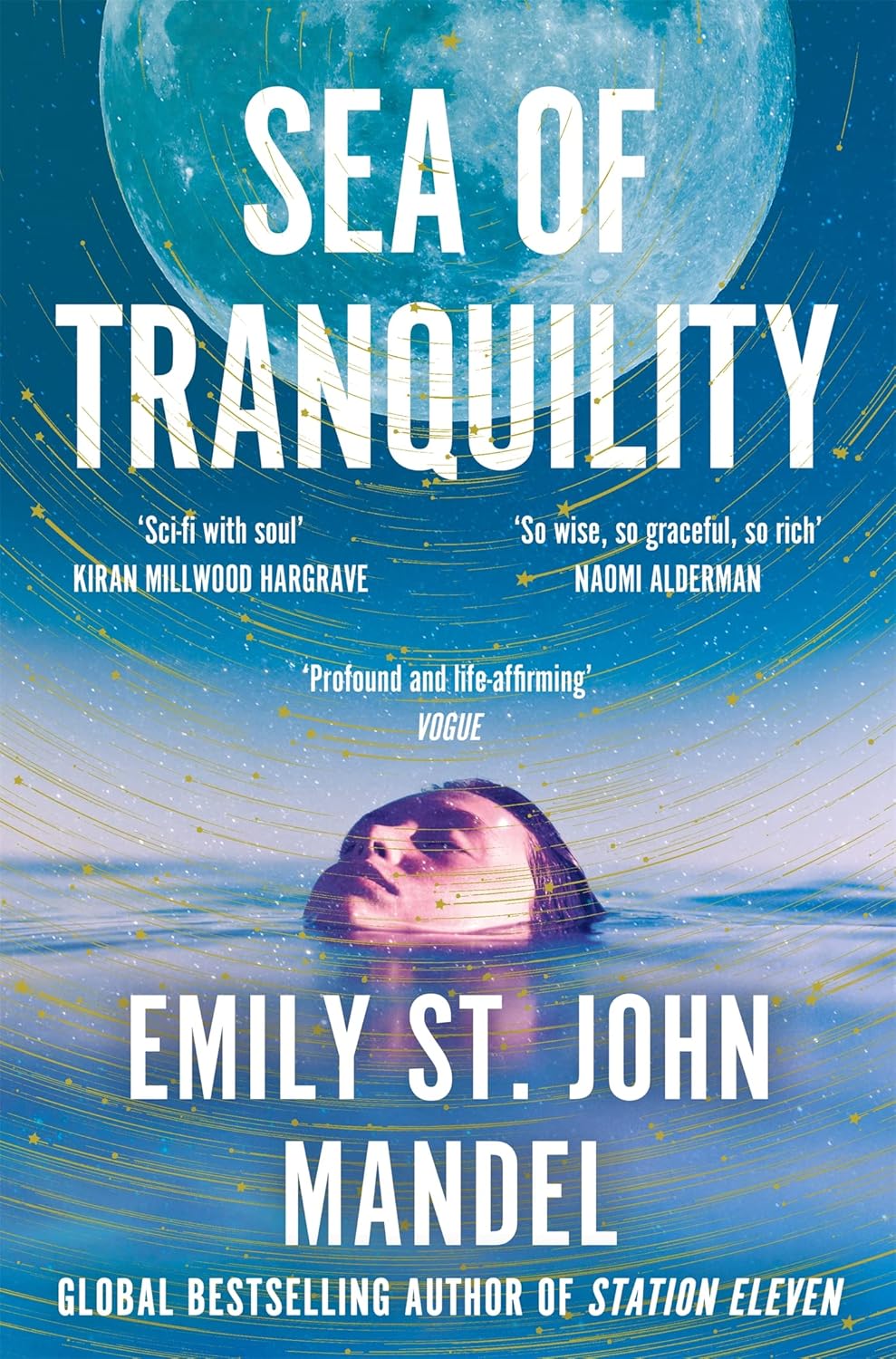
The plot is essentially something we’ve seen in SF a few times now: the idea of a time travel agency that investigates anomalies in the timeline. We follow the story of an individual living a somewhat aimless life, who gets recruited into the agency. The more I thought about the book when I was preparing for the interview, the more it made me realise how well-used this plot is in the time travel novel. But she is just such a talented writer, hypnotically good, that I didn’t even notice while reading.
I did have some quibbles with the world-building. Time travel, in particular, can be one of the most unforgiving of thought experiments. While time travel can never make perfect ‘sense’ (because it is impossible, and gives rise to paradox after paradox), there are ways for it to make more or less sense within the rules defined by the world. It wasn’t perfect here – for one time travel is also teleportation (so you can travel to any time, but also any place in the universe).
Normally – as I mentioned above – I’m fiercely critical on matters of flawed world-building, but the strength of the storytelling was enough to push these concerns aside.
- Player of Games (Scottish) (1988)
The first Iain M Banks book that I read – and this was quite a few years ago now – was Consider Phlebas, which I thought was fine, but didn’t make me want to go out and read the whole Culture series (which is ten books long).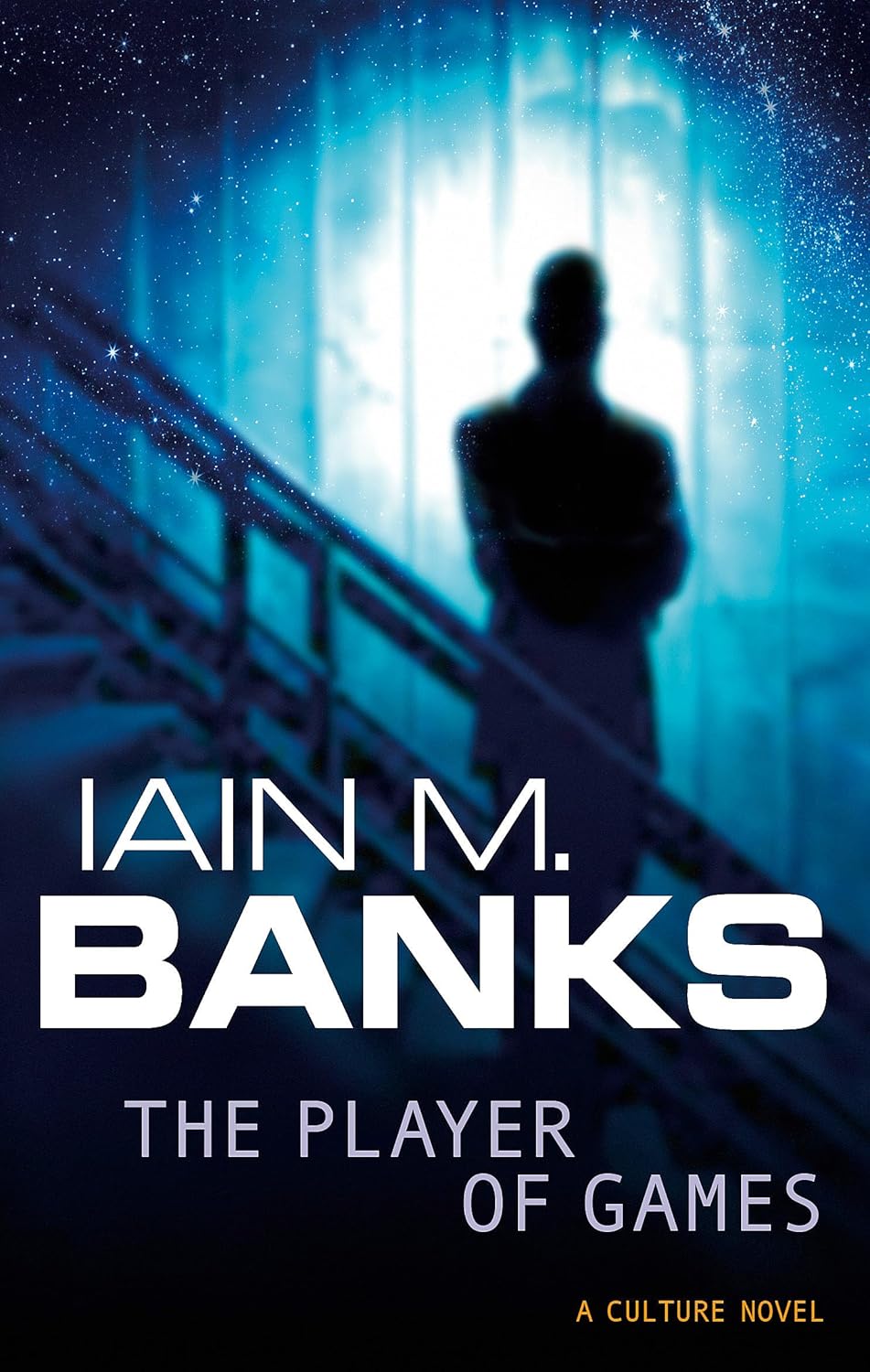
But here’s the thing, readers: my name is T. R. Napper and I’m a bookaholic. As such, I have most of the Culture series on my bookshelf. So, decided to have another crack and this time I tried Player of Games. It was excellent. In fact it was so good it made me want to dive back into the series.
What I really enjoyed is that we go into someone’s head (Gurgeh) whose whole life is board games. He lives in a civilisation that, on the surface, is a utopia. The ‘Culture’ is a seemingly benign space-faring civilisation run by super-intelligent AIs, where every need is met, where there’s no poverty or illness, and where everyone lives for several hundred years. But, beneath this surface, the Culture runs a shadowy organisation called Special Circumstances to fight its wars – sometimes out in the open, but more typically, through subterfuge and manipulation.
The ‘what if’ in the book is what if another culture, was based entirely on a fiercely complex board game (called AZAD). What if the best player became the emperor? And what if positions of responsibility were given to the strongest players, and society in general was structured around the ideas of the game?
What if the society was also corrupt and debased that the Culture wanted to do something about it, and so sent their best player of games – Gurgeh – to this civilisation to learn AZAD and play against them?
Banks is a sophisticated and fiercely intelligent author who deals with complex ideas and situations, and in this case, executes the exploration of them perfectly.
- Dissolution (Scottish) (2025)
The author, Nicholas Binge, gave me an advance copy of this book at Glasgow WorldCon. I don’t know Nick – we met there for the first time – so this isn’t me doing a favour for a friend (a common occurrence in this business), but rather my genuine reaction to the novel.
I liked it enough to give it a praise quote, which is as follows: ‘A taut techno-thriller written with compassion and intelligence. This is an intricately plotted and – from a craft perspective – a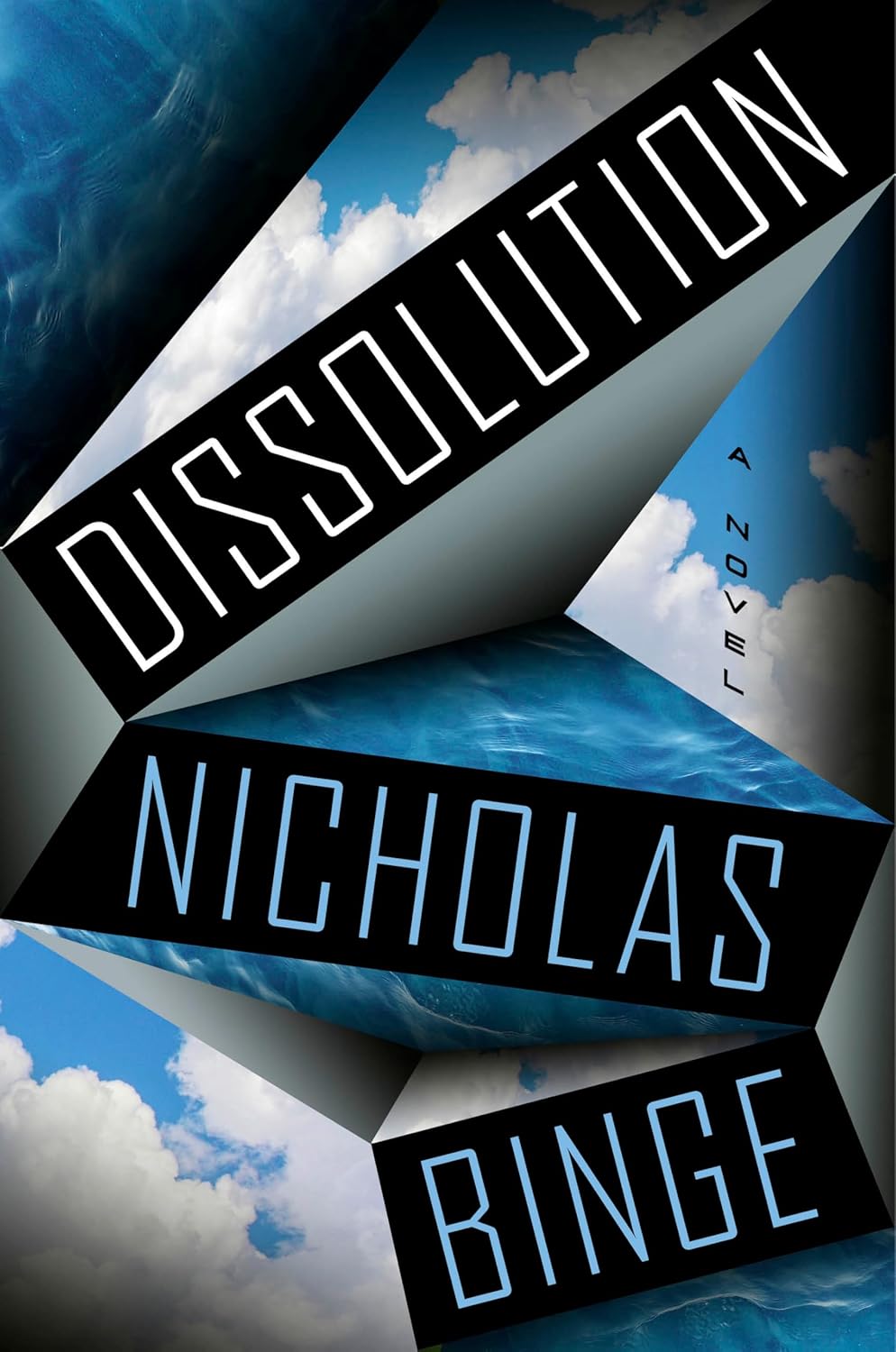 technically difficult novel to write. Nonetheless, Binge creates a gripping narrative that takes the reader on a page-turning journey through both time and memory.’
It’s not an easy book to explain, but in short is about an elderly woman (Maggie Webb) whose husband seems have Alzheimer’s. She meets someone (Hassan) who tells Maggie he can place her in her husband’s memories, and help her repair them. But – there is, of course, a catch – you have to do something for me while you’re there. An early twist is that someone is actively removing his memories, and we further discover that the erasure of memories can have an impact on reality. It sounds complicated (and it is), and it’s hard to explain how Dissolution can be compelling, but it is genuinely a page-turner.
One of the reasons I liked the book so much is that I could see the author had researched the science of memory. Something that I have done for a lot of my works. I’ve read vast amounts on how memory works, about the infallibility of memory, how it can be manipulated, and so on and so on. As I was reading Dissolution, I wondered if the author had read some of the same books as me. I messaged him and asked about the books he’d read, and discovered that he’d read at least one of the same texts.
To be clear: his works and mine are radically different. You couldn’t really compare them. But I can say with some authority that he gets memory right, and he writes a damn good techno-thriller.
- Klara and the Sun (British) (2021)
Ishiguro is my favourite living author, and his most recent work does not disappoint. Klara and the Sun is an excellent science fiction novel, concerned with Ishiguro’s career-long obsessions over loyalty, individual agency, personal sacrifice, and loss. The protagonist is Klara, a solar-powered artificial intelligence, who is sold into service of a family to help with their sickly daughter, Josie. The daughter became ill after her parents had her ‘lifted’ – genetically enhanced, with the promise of being academically superior.
Klara is highly intelligent, yet has a child-like innocence about the world, as she hasn’t yet had the chance to live a life (the novels opens with her in a store, waiting to be purchased). Her true purpose in life is to serve (much like the Butler Stevens in Remains of the Day), but her fate is to be discarded (much like the young people in Never Let Me Go).
Ishiguro does a remarkable job of portraying the mind of an artificial intelligence. The insights she has into human behaviour, alongside her deep confusion; the way Klara might see and process the world, the way she reacts to stress, are all both believable and strange. It is hard for any writer to deliver a world-view that is alien and disorienting to our own, and yet stays believable and accessible to the reader. It is hard because we are all trapped within the cages of our own minds, and those minds are human. How to truly create something alien? How to truly describe a thought process and experience of knowing that feels sufficiently foreign to our own?
 As I said: Ishiguro does not disappoint. He even explores the idea of AI spirituality (or superstition), and ingeniously constructs a believable cosmology for an android who relies on the power of the sun.
It is a beautiful novel, with a heartbreaking ending.
I won’t say Ishiguro influence my prose – I wish it could be as good as his. But one of the things he does I have tried to take on board is subtext and subtlety. He’s one of these writers that can pack multiple meanings into each of his sentences – characters, in particular, saying one thing but meaning another. Characters, furthermore, who are deluding themselves, a truth he slowly reveals to the reader.
Ishiguro is also obsessed with memory, and the fallibility of it. A Pale View of Hills, The Buried Giant, An Artist of the Floating World – all these deal to some extent with unreliable, or hidden, or false memories.
Kazuo Ishiguro (unlike me) writes very quiet and melancholic novels that yet (I hope like me) pack an emotional punch.
Don’t understand the British/Scottish dichotomy in your favourite books podcast as a Scot living in England. It should be English rather than British by all rights.