

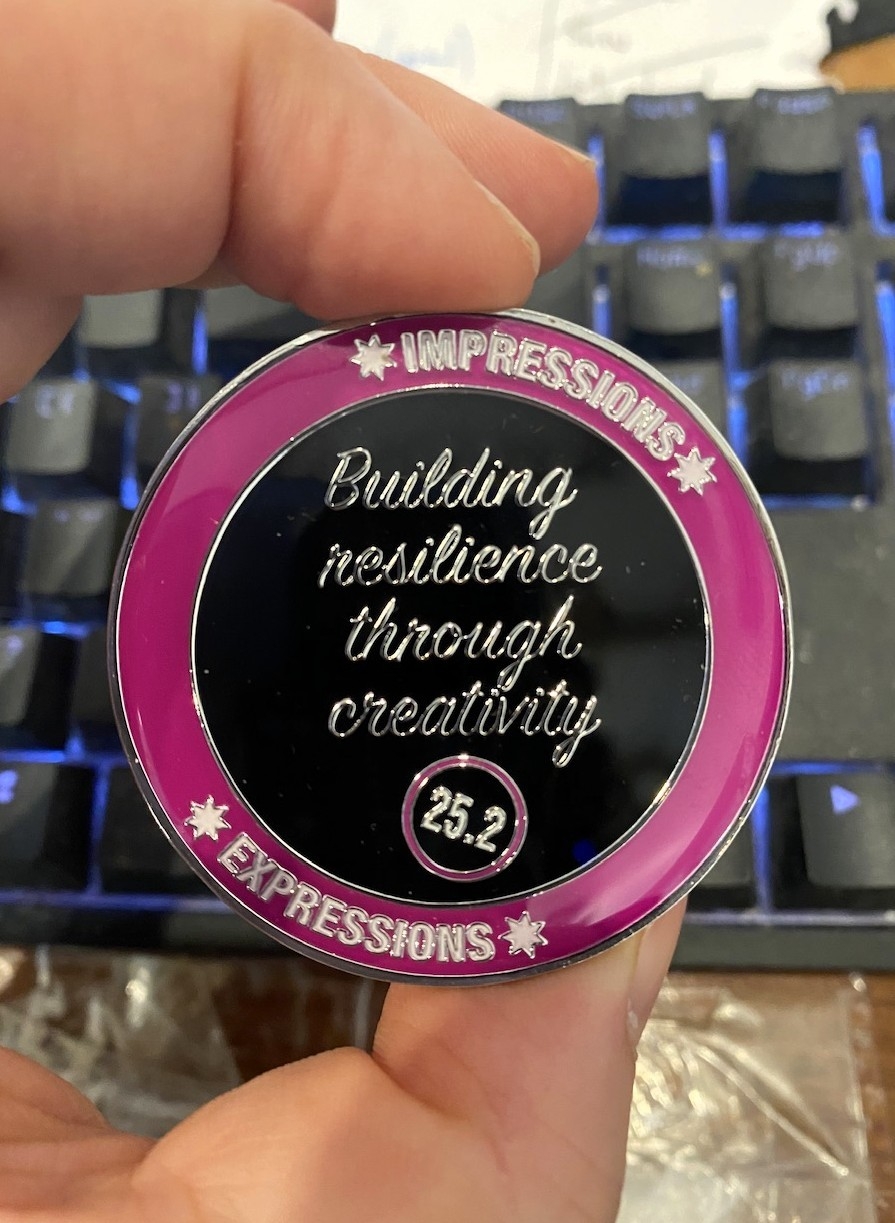
Art is not a luxury, it is a necessity. Let me show you why.
I write full time, which is another way of saying I’m broke. As such, I work several extra jobs (three, currently) to feed my writing habit. I’m lucky, insofar as most of those jobs are as a creative writing mentor, and I’ve always enjoyed teaching. I’m particularly fortunate to have one of those mentor positions with a program called ARRTS (Art for Recovery, Resilience, Teamwork and Skills).

In partnership with the University of Canberra (where I am an Adjunct Professor), the Australian Defence Force funds the ARRTS program. It draws in military personnel from across Australia who are suffering serious trauma. There are a handful of first responders as well (paramedics, firefighters) in each cohort.
The ADF flies them to my home town of Canberra, where for one month they do one thing and one thing only: create art. They can choose visual arts, music, or writing. The latter is where I come in. Alongside one other mentor (most recently a professor of poetry) I teach the fundamentals of storytelling, and assist the participants in getting their ideas out on the page.
They can do anything they want, whether poetry or prose, short fiction or long, or even a play. The most recent group I taught did all of the above. It is full-time, and as such an emotionally and intellectually intense four weeks, even for me, just as one of the mentors.
And let me tell you something remarkable about ARRTS: it works.
The change in the participants over those four weeks is remarkable. They are withdrawn when they begin, closed off, twitchy in some cases, tight empty smiles in others, struggling just with the bare necessities of day to day living. By the end of the program they are different people. Or, to be more precise, the people they were before the trauma.
According to formal research conducted on the program:
“87% of respondents reported benefit in behavioural activation, sense of belonging, flow and therapeutic alliance, while 61% reported those benefits persisting 2 years after the programme.”

The first time I did it (I’ve just completed my second stint), there was one bloke, who on the first day, when asked his name, had a stutter so severe it took him a minute to get it out. At the end of the second week we went to a poetry open mic night at a bohemian club in the city. This same guy got up, read out a poem he’d written, and performed it perfectly, every word. The crowd – who I’d feared would be a bunch of angry anti-war hippies (and in fairness, they probably were) – gave him the most sustained applause of any of the poets that evening. As he spoke of his desire to be free of his anguish, to return to the living world, live with nature on his farm, the atmosphere in the room was electric.
A second participant I’ll mention was a woman in the military, who had previously been a police officer. When she was in the force, colleagues would often ask her to be the one to inform a family about the death of a loved one (a woman being better at this type of thing, according to her male co-workers). She wrote a one-page story about this, about how this duty had broken her, and I swear it was one of the most moving things I’d ever read. It still shakes me up, eighteen months later. She asked me to edit it for her, but I barely had to change a word.

The most recent group I worked with produced poetry, fantasy fiction, LitRPG, and a play, and through their work told their story, expressed their grief in different ways, and healed. The camaraderie in the group was genuine, as was the atmosphere of support for each other, and the commitment to the creative process.
At the end of the month, the participants put on a showcase for friends and relatives, and for very senior officers in the military (I believe the Chief of Army and Chief of Navy were there this time around). It had music (performed by the participants), a gallery of the visual arts produced, and readings from the people I worked with. It was by turns uplifting, heartbreaking, moving, revelatory. No one who witnessed the performance could question the benefits of the program.

My experience with ARRTS was a privilege. That was the overwhelming sense I had when I watched the showcase. That, and being witness to this truth: art and creativity are not a luxury, they’re a necessity. Stories are the way we heal each other, and we heal ourselves. Creativity is a fundamental part of being human and when that is denied, we are lessened.
One of the key messages the participants receive day in and day out during the four weeks is this: make art a part of your life. Build a place for creativity in your future.
This lessen is true for all of us. Consume art, listen to the stories of others, and find a way to tell your own story. Be it through music, or something you build by hand, a fantasy world you create, a drawing for a loved one.
Be creative. It’s what makes us human.
